In a country with extraordinary natural potential, yet still underexplored in nature tourism, the Namibe Camping Park is being reborn as an inspiring example of what is possible when vision, will, and dedication come together.
Located in one of Angola’s most authentic and scenically rich provinces, the park is being rehabilitated by the promoter Paulo Pio, who decided to transform an abandoned space into a true meeting point for adventurers, families, and camping enthusiasts.
His work demonstrates that revitalizing tourism infrastructure does not only mean restoring walls and spaces, but rather reactivating memories, creating opportunities for the local community, and paving the way for a more sustainable, accessible, and decentralized tourism model.
The example of Namibe proves that, with determination and the right partnerships, any region can invest in camping, nature, and outdoor experiences as drivers of tourism development.
In this interview, Paulo Pio shares the challenges, the vision, and the future of a project that is already inspiring other provinces to look at their own parks with new eyes.
Paulo Pio: I am the owner of three hotel units and responsible for the requalification of the Namibe Camping Park. What motivated me to take on this challenge has very personal roots.
Before the war period, it was common in our families to go camping, have picnics, and visit dams. We always went in groups — cousins, uncles, friends — and spent unforgettable moments in contact with nature.
When I came across this park, those childhood memories immediately returned.
At the same time, as I observed the growing flow of tourists seeking out Namibe, I realized that this investment corresponded to a real need.
It was this combination of emotional memory and tourism opportunity that led me to embrace the project.
I discovered the park almost by chance. The then governor invited me to support an activity that was to take place at the Camping Park. Upon entering, I immediately realized that the space was quite abandoned.
The image that came to mind was that of a “Ferrari without fuel”: it had potential, but had been idle for years. I asked whether there was a possibility to obtain a concession for the park and was informed that I could submit a formal request.
I submitted the project and, about a year later, I was granted the operation of the park for rehabilitation.
The greatest difficulty was not technical, but bureaucratic. The first concession process was very fast, with the contract signed and direct support from the governor and the administrator, both interested in the rapid recovery of the park.
However, about eight months later, a civil society association from Namibe challenged the concession, alleging that there should have been a public tender. The contract was terminated and the park was put out to tender for one year — without any interested parties coming forward.
Subsequently, the administration contacted me again, stating that it did not have the financial capacity to rehabilitate the park and asking whether I would be willing to resume the project. I reassessed the conditions, adjusted clauses, and accepted again. This is the stage I am currently in.
We carried out a deep rehabilitation of the main building, built in 1974, whose structure remains solid. We renovated plumbing, sewage systems, painting, decoration, and reorganized the spaces.
The park has a reception area, office, manager’s house, shops, rooms, communal kitchen, traditional bar, changing rooms, laundry, restaurant, and staff housing. All the basic infrastructure has been restored to operate with dignity.
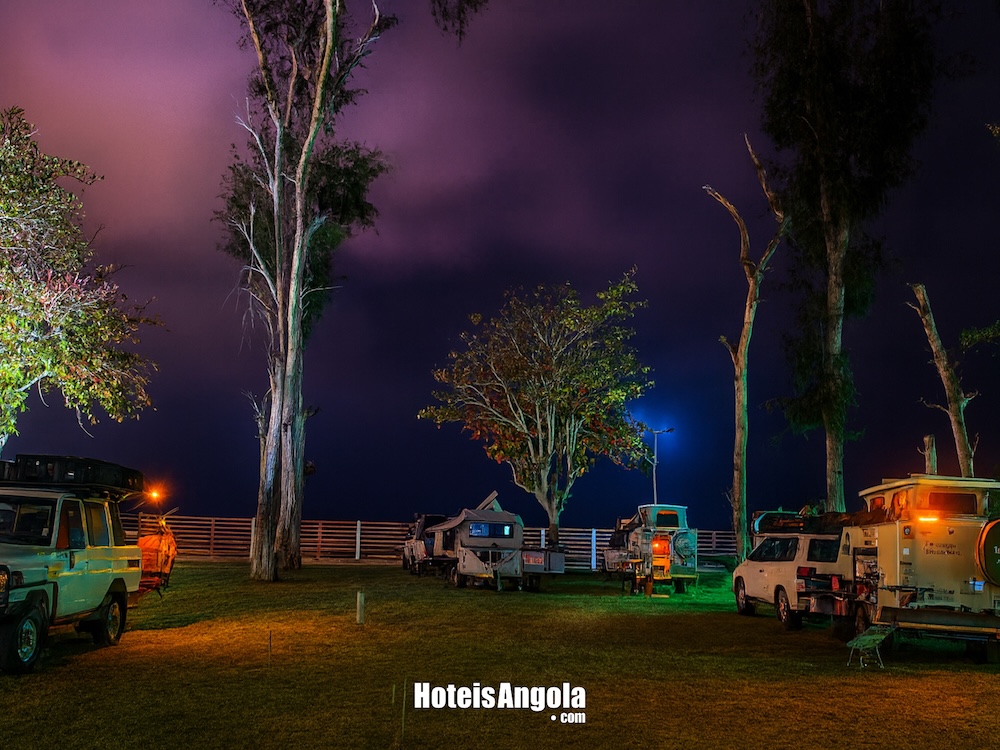
Outdoors, the park features five camping areas, a natural swimming pool, a multipurpose hall, a nautical area with canoes and leisure boats, as well as an extensive and beautiful beach right in front of the park — a rare privilege.
We also built new rooms in powapik (our “quimbos”) and recreated the sanzala, with a traditional txoto, which will be a cultural interpretation space, allowing visitors to learn about customs of southern Angola, gastronomy, and local traditions, always accompanied by a guide.
The landscaping work was strengthened with fruit trees — mango trees, orange trees, lemon trees, grapevines — creating shade, food, and a direct connection with nature.
The local community and the government have supported the project. The governor regularly visits the park, follows the works, and shows interest in the progress.
The greatest difficulty continues to be access to bank financing. We work essentially with our own funds, which makes the process slower. Even so, local entrepreneurs recognize the effort and encourage the initiative.
Even before the official opening, we are already feeling the demand. Many tourists arrive at the park daily, which demonstrates the shortage of this type of offer.
Camping offers rest, safety, and closeness to nature, with more accessible investments than traditional hotel businesses, responding exactly to the profile of those who travel through the south of the country.
The message is clear: it takes courage to act. Camping does not require gigantic investments, and Angola has unique natural conditions.
With greater unity, partnerships, camping networks, and real incentives — such as initial tax exemptions — we can transform camping into one of the pillars of national tourism, benefiting entrepreneurs, communities, and the country itself.
Available daily from 08:00 to 22:00. This support line helps clarify doubts, assist with reservations and guide you towards the best accommodation and tourism services.
 English
 Português
 WhatsApp
 Phone
Phone
 Email
Email