The Bentiaba Prison Center, built in the middle of the Namibe desert, almost 150 kilometers from Moçâmedes headquarters, carries a history marked by myths, atrocities and terror.
Created during the colonial era to isolate prisoners of conscience (political prisoners), the former São Nicolau prison was once known as a torture center where only heroes survived. The center has undergone a political and infrastructural transformation with notable investments from Angolan authorities.
The pain, fear, and terror of the past have given way to a life of peace and tranquility for citizens who lost part of their freedom due to judicial convictions, but who maintain the dream of reintegration into society.
It gained prominence in the 1960s, coinciding with the birth of national liberation movements.
It retains its open character, similar to its earlier days when it housed prisoners of conscience.
Bentiaba is a historical site that aims to be elevated to national and world cultural heritage status, where the humanization and improvement of prisoner reception conditions is a priority.
Unique in Angola for its open-air design, the unit is situated in a privileged area ideal for tourism, surrounded by a desert landscape of rocks, mountains, and sand, interspersed with the Bentiaba River.
It originated in 1824, but was only officially recognized as a prison in 1974, under Decree 68/74 of August 29, published in Official Bulletin No. 201.
The Bentiaba Prison, built in the heart of the Namib Desert, almost 150 kilometers from the provincial capital, carries a history marked by myths, atrocities, and terror.
The accounts of anguish in the historical center are almost always terrifying and originate from various corners of Portuguese-speaking Africa. However, the current reality of the "desert prison" is far from that.
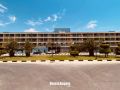
The architecture, the natural atmosphere, and the combination of colors, predominantly the green brought in by the agricultural fields, are aspects that give it notoriety.
However, it is the ideological phrases written on the walls, in large letters, that best illustrate the prison's activity.









 English
 Português