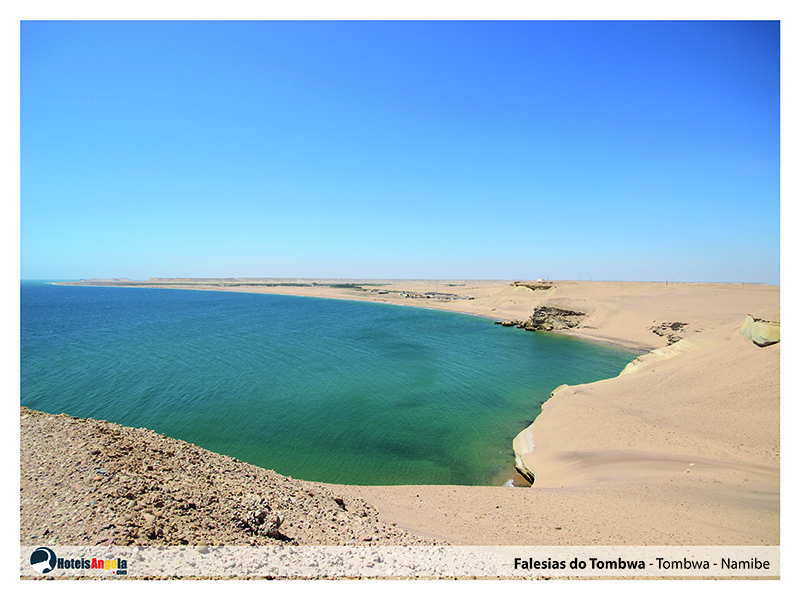
The Namibe Desert (formerly Moçâmedes) is a vast desert that stretches from the southern coast of Namibia to the southwestern coast of Angola and is part of the Namib-Naukluft National Park, the largest game reserve in Africa.
The name Namibe originates from one of the local languages, Khoekhoegowab, and means “vast place,” which accurately reflects reality, as the desert covers an area of approximately 80,900 km², stretching for 1,600 km along the Atlantic coast from southern Angola to southern Namibia.
In its east–west width, the desert ranges from 50 to 180 km.
It is considered the oldest desert in the world, due to its aridity caused by the descent of dry air cooled by the cold Benguela Current that flows off the coast of Namibia.
Near the coast, the desert is known as the “Skeleton Coast” because many sailors were shipwrecked and died there.
Despite the desert climate, the cold Benguela Current alters this reality.
Suggested 1-Day Route
Very hot with high temperatures. Visitors should wear light-colored clothing with higher sun reflectivity to avoid health issues.
Among the plants found in Namibe, the Welwitschia mirabilis stands out. It can live for more than one hundred years, and its leaves absorb moisture from the air.
Among the animals, notable species include the desert snake, the African elephant, the rosy-faced lovebird, as well as several species of lizards and other animals that survive the region’s harsh climate.
UNESCO has listed the Sand Sea of the Namibe Desert as a World Heritage Site for “being a unique environment with endemic invertebrates, reptiles, and mammals that have adapted to a variety of microhabitats and constantly changing ecological niches.”



 English
 Português